
Breastfeeding Shouldn’t Be Painful: Understanding Breast Engorgement After Delivery
Breastfeeding is an important part of the postpartum journey, but it does not always begin smoothly. During the first few days and weeks after delivery, many mothers notice that their breasts become fuller, firmer, warmer or uncomfortable. This can happen as milk production increases and the breasts adjust to the baby’s feeding pattern.
When the breasts become excessively full, swollen and uncomfortable, the condition is commonly known as breast engorgement. It may make breastfeeding more difficult because swelling can affect how easily the baby attaches to the breast.
Breastfeeding itself should not remain painful. If a mother is experiencing persistent pain, significant tenderness, difficulty with latching or other breast-related symptoms, appropriate guidance can help identify the cause and improve breastfeeding comfort. The CDC notes that breastfeeding pain may be associated with issues such as an improper latch, a plugged milk duct or mastitis and recommends discussing persistent pain with a healthcare professional.
For new mothers, understanding breast engorgement and knowing when to seek professional support can make the early breastfeeding experience more comfortable for both mother and baby.
What Is Breast Engorgement?
Breast engorgement occurs when the breasts become overly full and swollen as milk production increases. It commonly occurs during the early days after birth, although it can also happen later if the baby’s feeding pattern changes or milk is not being removed effectively.
The breasts may feel:
- Full
- Firm or hard
- Heavy
- Warm
- Tight
- Tender or painful
According to the CDC, breast engorgement commonly occurs during the first few weeks after birth as the mother’s body adjusts to producing and removing milk. Feeding the baby regularly can help prevent severe engorgement and relieve discomfort.
Breast engorgement is usually manageable, but significant or persistent symptoms should not simply be ignored.
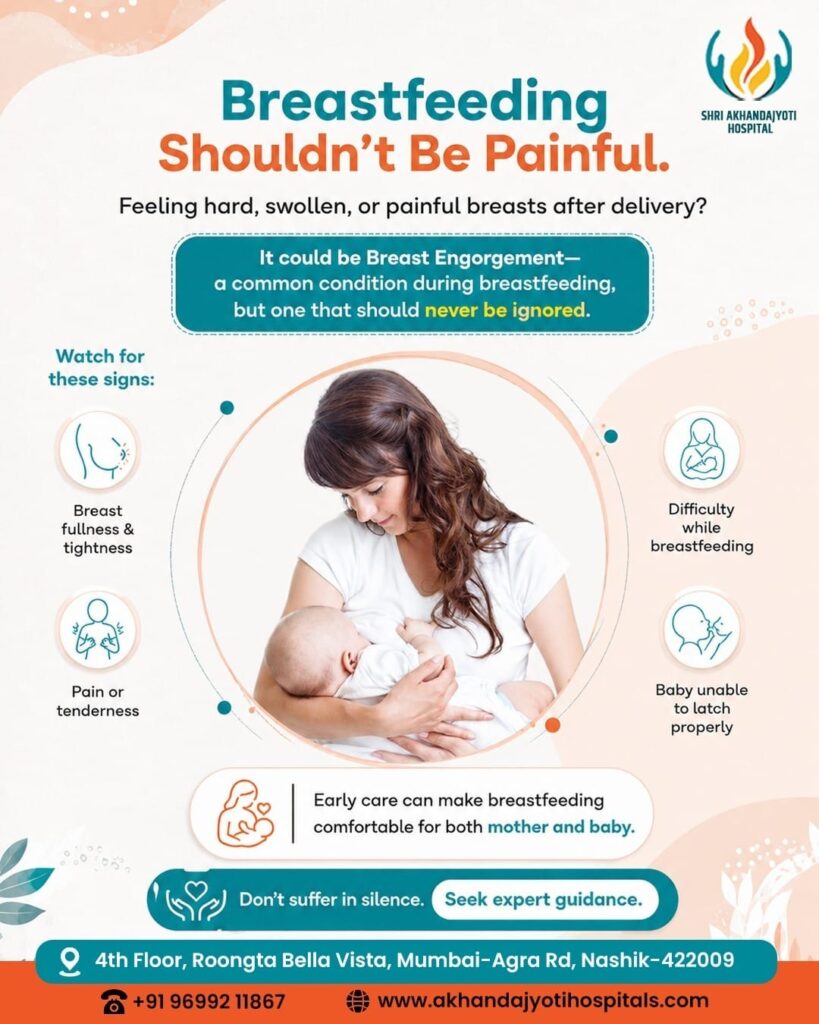
Why Does Breast Engorgement Happen After Delivery?
After childbirth, hormonal changes stimulate milk production. During the early days, the amount of milk produced gradually increases. The breasts may temporarily produce more milk than the baby removes.
Other factors can also contribute to breast fullness and engorgement, including:
- Delayed initiation of breastfeeding
- Ineffective latch
- Incorrect breastfeeding position
- Missed or infrequent feeds
- Sudden changes in the baby’s feeding pattern
- Separation of mother and baby
- Difficulty expressing milk when necessary
The World Health Organization emphasizes appropriate attachment, positioning and breastfeeding support as important components of managing breastfeeding difficulties and engorgement.
What Does Breast Engorgement Feel Like?
Every mother’s experience can be different, but common signs include:
1. Breast Fullness and Tightness
The breasts may suddenly feel much fuller than usual. They can become firm, stretched or tight.
2. Breast Tenderness
Swelling can make the breasts uncomfortable or tender, particularly before feeding.
3. Difficulty With Breastfeeding
When the breast and nipple area become swollen, the baby may find it harder to attach properly.
4. Difficulty With Latching
A good latch is important for effective milk transfer and comfortable breastfeeding. When swelling changes the shape or firmness of the breast, achieving a comfortable latch may become more challenging.
5. Warmth or Mild Discomfort
Breasts can feel warm as milk production increases. However, significant redness, severe pain or fever may require medical assessment because these symptoms can also occur with breast inflammation or infection.
Why Is a Proper Latch Important?
A baby’s latch refers to how the baby’s mouth attaches to the breast during feeding. An effective latch allows the baby to remove milk efficiently and can help reduce nipple discomfort.
An improper latch may cause:
- Nipple pain
- Sore nipples
- Cracked skin
- Ineffective milk removal
- Prolonged feeding
- Increased breast fullness
The CDC recommends seeking support when a mother is having trouble getting a good latch or is concerned about whether the baby is receiving enough milk.
A lactation professional, nurse, midwife or doctor can observe a feeding session and help correct positioning and attachment when necessary.
How Can Breast Engorgement Be Managed?
Management depends on the severity of symptoms and the individual mother’s circumstances. If you are experiencing significant discomfort, professional breastfeeding guidance can be valuable.
Continue Feeding According to the Baby's Needs
For mothers who want to continue breastfeeding, regular feeding can help milk removal and reduce excessive breast fullness.
WHO guidance recommends supporting women with breast engorgement who wish to continue breastfeeding.
Rather than following a rigid feeding schedule, mothers can learn to recognize their baby’s hunger cues and feed accordingly.
Check the Baby's Position and Latch
If the baby is struggling to latch, correcting the position may make breastfeeding more comfortable and improve milk transfer.
A healthcare professional or breastfeeding counsellor can help the mother understand:
- How to position the baby’s body
- How to support the breast
- How to encourage a deeper latch
- How to recognize effective sucking and swallowing
Express a Small Amount of Milk if Necessary
When the breast is extremely firm, expressing a small amount of milk may soften the area around the nipple and make it easier for the baby to latch.
WHO guidance describes expressing enough milk to soften the breast and facilitate attachment rather than routinely trying to completely empty the breasts.
The appropriate method—hand expression or pumping—can depend on the mother’s situation and comfort.
Warmth Before Feeding
Some breastfeeding guidance recommends gentle warmth immediately before feeding or expression to support milk flow and comfort.
WHO breastfeeding guidance describes warm water or compresses before feeding as one option for mothers experiencing engorgement.
Warmth should be comfortable rather than excessively hot.
Cold Between Feeds
Cold packs may help reduce swelling and discomfort between breastfeeding sessions. WHO guidance includes cold packs between feeds as an option for swollen breasts.
Always protect the skin by wrapping a cold pack rather than placing extreme cold directly against the breast.
Wear a Comfortable, Supportive Bra
A comfortable bra can provide support without putting excessive pressure on the breast.
Avoid anything that feels overly tight or creates pressure on a specific area of the breast.
Breastfeeding Should Not Remain Painful
Some tenderness can occur during the early breastfeeding period, particularly while mother and baby are learning. However, persistent or significant pain deserves attention.
The CDC states that breastfeeding should not remain painful once the baby is well-latched. Persistent pain can sometimes indicate an underlying problem such as improper latch, a plugged milk duct or mastitis.
If breastfeeding hurts during every feed, the nipples are damaged or the pain is getting worse, ask a healthcare professional to assess the situation.
Breast Engorgement vs. Mastitis: What Is the Difference?
Breast engorgement and mastitis are not the same condition.
Breast engorgement generally involves excessive fullness, swelling and discomfort as milk production adjusts to the baby’s feeding pattern.
Mastitis involves inflammation of breast tissue and may sometimes be associated with infection. Symptoms can include a painful or tender area, redness, warmth and fever.
WHO describes mastitis as potentially developing in association with engorgement or blocked milk ducts and advises further medical help when symptoms persist or worsen.
Because the symptoms can overlap, mothers should not attempt to diagnose themselves based only on breast appearance.
When Should You Seek Medical Help?
Contact your doctor or healthcare provider if you experience:
- Persistent or severe breast pain
- Fever
- A painful, red or hot area on the breast
- Symptoms that are worsening rather than improving
- Cracked or damaged nipple skin that is not healing
- Pus or unusual discharge
- A persistent lump
- Difficulty feeding the baby
- Concerns about the baby’s latch
- Concerns that the baby is not getting enough milk
The CDC specifically recommends discussing breastfeeding pain with a doctor or nurse, particularly when pain occurs with fever.
Prompt assessment can help determine whether the problem is related to latch, milk removal, inflammation, infection or another breast condition.
Can You Continue Breastfeeding With Breast Problems?
In many situations, breastfeeding can continue while the mother receives appropriate care. WHO guidance supports continued breastfeeding for mothers experiencing engorgement who wish to breastfeed.
Some breast infections can also be managed while breastfeeding. However, specific circumstances may require individualized advice from a healthcare professional.
For example, the CDC notes that mothers with certain breast infections, including MRSA-related breast infections, can often continue breastfeeding under medical guidance, but precautions may be necessary when there is infected tissue or drainage.
Therefore, do not automatically stop breastfeeding because you develop breast pain. Speak with your healthcare provider to understand what is appropriate for your situation.
How Can New Mothers Reduce the Risk of Severe Engorgement?
Some practical steps may help make breastfeeding easier during the early postpartum period.
Start Breastfeeding Early When Possible
Early initiation can help establish breastfeeding and milk removal. The CDC recommends breastfeeding as soon as possible after birth when appropriate and notes that early feeding can help establish milk supply.
Feed According to Baby's Hunger Cues
Learning the baby’s feeding cues can help mothers respond before the baby becomes very distressed.
Get Help With Latching
Do not wait until breastfeeding becomes extremely painful before asking for assistance.
Avoid Unnecessary Long Gaps Between Feeds
If the baby is feeding less frequently because of sleepiness, illness or another reason, discuss the situation with your healthcare provider.
Ask for Breastfeeding Support Before Leaving the Hospital
The early postpartum period is an excellent time to learn comfortable feeding positions and proper attachment.
The WHO recommends breastfeeding counselling and support as part of maternity and newborn care.
The Role of Postpartum Care
Postpartum care does not end when the mother leaves the delivery room. The weeks following childbirth involve significant physical and emotional adjustments.
A new mother may need support with:
- Breastfeeding
- Breast engorgement
- Infant feeding
- Postpartum recovery
- Nutrition
- Sleep and rest
- Emotional well-being
- Follow-up appointments
WHO recommends postpartum care that includes support for common problems such as breast engorgement and attention to warning signs requiring medical care.
Choosing a facility that provides appropriate maternity and postpartum support can therefore be an important consideration for expecting families.
Choosing Maternity Care in Nashik
For expecting parents, selecting a maternity care provider involves more than considering the delivery itself. Breastfeeding guidance, postpartum support, newborn care and access to qualified healthcare professionals can also be important.
When families search for the Best Maternity Hospital in Nashik, they may consider factors such as:
- Qualified obstetric and gynecological professionals
- Maternity and postpartum services
- Newborn care facilities
- Breastfeeding support
- Accessibility for follow-up visits
- Emergency medical support
- Communication with mothers and families
Similarly, women researching the Best Gynac Hospital in Nashik can look for a healthcare facility where gynecological and postpartum concerns can be assessed by qualified professionals.
Shri Akhandajyoti Hospital, located at Roongta Bella Vista on Mumbai–Agra Road in Nashik, provides obstetric and gynecological healthcare services.
Why Breastfeeding Support Matters
Breastfeeding is a learning process for both mother and baby. A mother may understand that breastfeeding is natural but still experience difficulty with positioning, latch, milk supply or breast discomfort.
This does not mean she has failed.
Professional guidance can help identify practical problems and provide individualized support.
WHO recommends that maternity and newborn facilities protect, promote and support breastfeeding through evidence-informed practices.
The CDC similarly emphasizes that breastfeeding mothers should have access to help with positioning, latch and concerns about milk intake.
Final Thoughts: Breastfeeding Shouldn't Be Painful
Breast engorgement is a common experience during the early breastfeeding period, particularly as milk production increases after delivery. Full, firm and uncomfortable breasts can sometimes make it difficult for a baby to latch properly.
The good news is that breastfeeding support, appropriate positioning, effective latch and suitable measures for relieving swelling can help many mothers manage the problem.
However, severe or persistent pain should not be ignored. Fever, increasing redness, significant tenderness, a persistent lump or other concerning symptoms should be assessed by a healthcare professional.
If you are looking for the Best Maternity Hospital in Nashik, consider a facility that provides not only maternity care but also appropriate postpartum and breastfeeding support. Women searching for the Best Gynac Hospital in Nashik should also consider access to qualified professionals who can evaluate postpartum breast concerns and provide individualized guidance.
Breastfeeding is a journey, and mothers deserve support throughout it. If breastfeeding becomes painful or difficult, don’t suffer in silence—seek appropriate professional guidance for yourself and your baby.
Frequently Asked Questions
Breast fullness and engorgement can occur during the early weeks after birth as milk production increases. However, severe or persistent symptoms should be discussed with a healthcare professional.
Early tenderness can occur, but persistent pain may be associated with problems such as an improper latch, plugged duct or mastitis. A healthcare professional can help identify the cause.
Yes. Swelling can make the breast and nipple area firmer, which may make attachment more difficult. Expressing a small amount of milk to soften the area may sometimes help, with appropriate guidance.
Do not automatically stop breastfeeding because of breast discomfort. In many cases, continued breastfeeding is supported, but your healthcare provider can advise you based on the cause and severity of your symptoms.
Seek medical advice for severe or persistent pain, fever, increasing redness or warmth, a persistent painful lump, damaged nipple skin or other concerning symptoms.
Yes. Professional breastfeeding support can help identify latch and positioning problems and provide guidance on feeding and milk expression. WHO recommends breastfeeding counselling and support during the postpartum period.
Shri Akhandajyoti Hospital, 4th Floor, Roongta Bella Vista, Mumbai–Agra Road, Nashik, provides obstetric and gynecological care. Mothers experiencing persistent breastfeeding pain or breast-related symptoms should consult an appropriate healthcare professional.