
Pregnancy Sugar : How Gestational Diabetes Can Affect Both Mother and Baby
Pregnancy is a period of significant physical and hormonal changes. During this time, some women may develop higher-than-normal blood sugar levels, even if they did not have diabetes before pregnancy. This condition is known as gestational diabetes mellitus (GDM).
Gestational diabetes may not always cause noticeable symptoms, which is why appropriate screening during pregnancy is important. When blood sugar is identified early and managed under medical supervision, the risk of certain pregnancy and newborn complications can be reduced.
If you are expecting a baby, understanding pregnancy sugar, its possible effects and the importance of regular prenatal monitoring can help you make informed decisions about your pregnancy care.
What Is Gestational Diabetes?
Gestational diabetes is a condition in which blood glucose levels become elevated during pregnancy. Pregnancy hormones can affect how the body responds to insulin. As pregnancy progresses, some women may develop increased insulin resistance, making it harder for the body to maintain normal blood sugar levels.
Gestational diabetes is different from diabetes that existed before pregnancy. However, both conditions require appropriate medical monitoring.
In many cases, gestational diabetes is identified through routine blood glucose screening rather than symptoms. This is why attending scheduled pregnancy check-ups is an important part of maternity care.
Women searching for the Best Gynac Hospital in Nashik should consider a facility where routine prenatal assessments and appropriate pregnancy-related screening are available.
Why Does Pregnancy Sugar Need Attention?
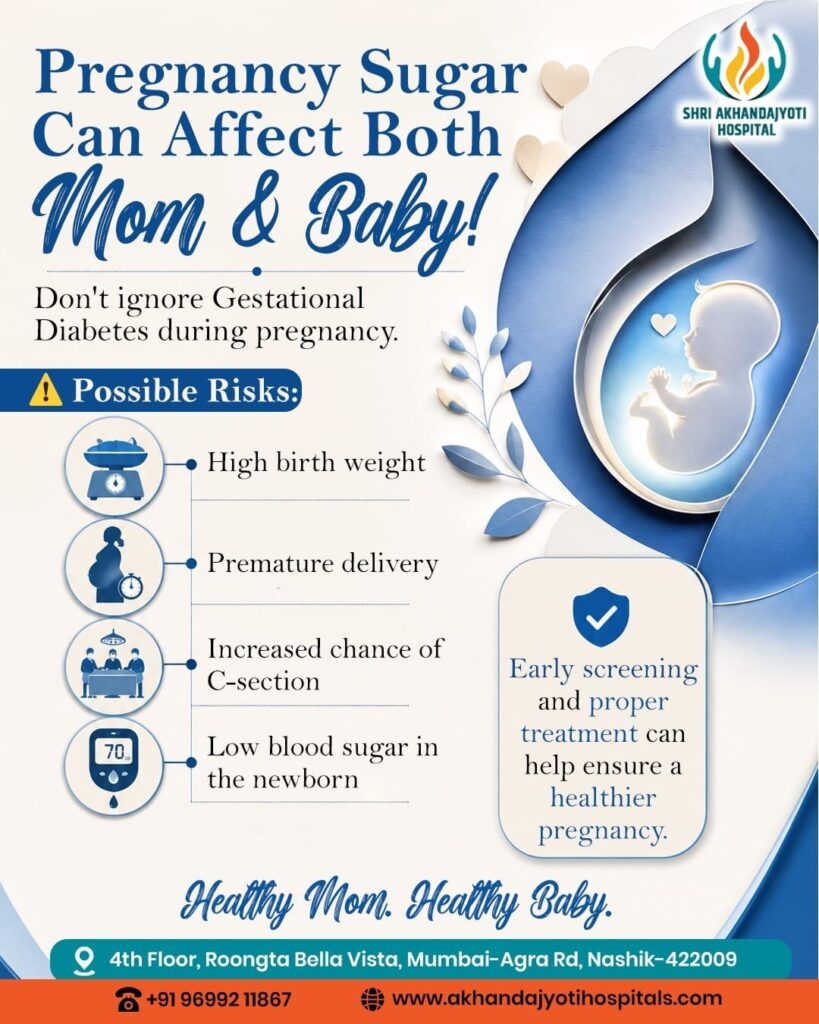
Uncontrolled blood sugar during pregnancy can be associated with health concerns for both the mother and baby. The level of risk can vary depending on factors such as blood glucose control, the stage of pregnancy and the mother’s overall health.
Possible concerns associated with gestational diabetes include:
- Higher birth weight in the baby
- Increased likelihood of certain delivery complications
- Increased possibility of cesarean delivery
- Low blood sugar in the newborn after birth
- Pregnancy-related blood pressure problems
- Increased risk of developing type 2 diabetes for the mother later in life
Having gestational diabetes does not automatically mean that these complications will occur. Appropriate monitoring and treatment can help manage blood glucose levels and support a healthier pregnancy.
How Does Gestational Diabetes Affect the Baby?
One concern associated with pregnancy sugar is increased fetal growth. When maternal blood glucose is elevated, more glucose can cross the placenta. The fetus may respond by producing more insulin, which can contribute to increased growth.
A larger baby can sometimes make vaginal delivery more difficult and may increase the likelihood of delivery-related complications. However, decisions regarding the mode and timing of delivery should always be based on an individual medical assessment.
After birth, some babies of mothers with gestational diabetes may experience low blood glucose. Healthcare professionals can monitor newborns when appropriate and provide treatment if required.
This is one reason why proper prenatal care and blood sugar monitoring are important throughout pregnancy.
How Can Gestational Diabetes Affect the Mother?
Gestational diabetes can also affect the mother’s pregnancy experience. Some women may have no noticeable symptoms, while others may experience increased thirst or urination, although these symptoms can also occur normally during pregnancy.
Pregnancy sugar may be associated with an increased risk of pregnancy complications, particularly when blood glucose is not adequately controlled.
Women diagnosed with gestational diabetes may need:
- More frequent blood glucose monitoring
- Dietary guidance
- Appropriate physical activity
- Regular prenatal appointments
- Medication when recommended by their doctor
- Additional fetal monitoring when clinically indicated
The exact treatment plan depends on the individual woman and her pregnancy.
Who May Have a Higher Risk of Gestational Diabetes?
Gestational diabetes can occur in any pregnancy, but certain factors may increase the likelihood.
These can include:
- Previous gestational diabetes
- Being overweight or having obesity before pregnancy
- A family history of diabetes
- Previous delivery of a baby with higher birth weight
- Polycystic ovary syndrome (PCOS)
- Certain ethnic or demographic factors
- Increasing maternal age
Having a risk factor does not mean that a woman will definitely develop gestational diabetes. Similarly, women without obvious risk factors can also develop it.
That is why healthcare providers may recommend screening according to pregnancy guidelines and individual circumstances.
What Are the Symptoms of Pregnancy Sugar?
Gestational diabetes frequently does not cause clear symptoms. Some women may experience:
- Increased thirst
- More frequent urination
- Fatigue
- Blurred vision
However, many of these symptoms can also occur during a normal pregnancy or due to other conditions.
Therefore, symptoms alone cannot confirm or rule out gestational diabetes. Blood glucose testing is used to assess whether blood sugar levels are within the expected range.
If you are concerned about diabetes during pregnancy, speak with your obstetrician rather than attempting to diagnose the condition yourself.
Importance of Early Screening
Screening is an important part of pregnancy management because gestational diabetes can remain unnoticed without testing.
Your healthcare provider may recommend a glucose test during pregnancy based on standard prenatal care and your individual risk factors. The specific test and timing can vary according to clinical guidelines and your doctor’s assessment.
If the screening result suggests elevated blood glucose, additional testing or monitoring may be recommended.
Choosing the Best Maternity Hospital in Nashik for your pregnancy care can involve considering whether the facility provides appropriate prenatal screening, obstetric consultation and support for managing pregnancy-related conditions.
How Is Gestational Diabetes Managed?
The management of gestational diabetes generally focuses on keeping blood glucose within the range recommended by the treating healthcare professional.
1. Follow a Balanced Pregnancy Diet
Nutrition plays an important role in blood sugar management. A doctor or registered dietitian may recommend an individualized meal plan.
A balanced diet may include appropriate portions of:
- Vegetables
- Whole grains
- Pulses and legumes
- Protein-rich foods
- Fruits
- Healthy fats
- Dairy or suitable alternatives
Rather than completely eliminating carbohydrates, the focus is generally on choosing appropriate carbohydrate sources, portions and meal timing according to professional advice.
Avoid making major dietary restrictions during pregnancy without consulting your healthcare provider.
2. Stay Physically Active When Appropriate
Physical activity may help improve insulin sensitivity and support overall pregnancy health for women who are medically cleared to exercise.
Walking or other pregnancy-appropriate activities may be recommended depending on individual circumstances.
However, exercise is not appropriate for every pregnancy in the same way. Women with specific pregnancy complications or medical restrictions should follow their obstetrician’s advice.
3. Monitor Blood Glucose
Your doctor may recommend checking blood glucose at specific times, such as before or after meals.
Keeping a record of your readings can help your healthcare team understand how your blood sugar responds to food, activity and treatment.
Do not change medication doses based solely on individual readings without discussing them with your healthcare provider.
4. Medication When Required
Some women can manage gestational diabetes with nutrition and physical activity, while others may require medication.
If medication is recommended, take it exactly as prescribed. The treatment choice depends on your blood glucose levels, pregnancy stage and overall health.
Can Gestational Diabetes Increase the Chance of C-Section?
Gestational diabetes can be associated with an increased likelihood of cesarean delivery, particularly when there are additional factors such as excessive fetal growth or other pregnancy complications.
However, having gestational diabetes does not automatically mean that a cesarean delivery will be necessary.
Your obstetrician will consider several factors, including:
- Baby’s growth
- Position of the baby
- Maternal health
- Blood sugar control
- Pregnancy complications
- Previous delivery history
- Progress of labor
The safest delivery approach is determined on an individual basis.
Can Women With Gestational Diabetes Have a Vaginal Delivery?
Yes, many women with gestational diabetes can have a vaginal delivery, depending on their individual pregnancy circumstances.
Good blood sugar management, appropriate prenatal monitoring and assessment of maternal and fetal health can help the healthcare team plan for delivery.
The mode of delivery should not be decided based solely on the diagnosis of gestational diabetes. Your obstetrician can explain the factors relevant to your particular pregnancy.
For families researching the Best Gynac Hospital in Nashik, discussing delivery planning with an experienced obstetric team can help you understand what to expect as your pregnancy progresses.
What Happens After Delivery?
Gestational diabetes often improves after delivery because pregnancy-related hormonal changes decrease. However, having gestational diabetes can indicate an increased future risk of developing type 2 diabetes.
For this reason, postpartum follow-up is important.
Your healthcare provider may recommend:
- Postpartum blood glucose testing
- Maintaining a healthy body weight
- Regular physical activity
- A balanced diet
- Ongoing diabetes screening as advised
Women who have had gestational diabetes should discuss an appropriate long-term follow-up plan with their healthcare provider.
Tips for a Healthier Pregnancy With Gestational Diabetes
If you have been diagnosed with pregnancy sugar, consider these general habits:
- Attend all scheduled prenatal appointments.
- Follow your prescribed blood glucose monitoring plan.
- Take medicines exactly as directed.
- Choose balanced, nutritious meals.
- Avoid excessive intake of sugary foods and beverages.
- Stay physically active if your doctor says it is safe.
- Keep track of your blood glucose readings.
- Discuss unusual symptoms with your healthcare provider.
- Follow recommendations for fetal monitoring.
- Attend postpartum diabetes screening when advised.
These steps can support pregnancy management, but they should complement—not replace—professional medical care.
When Should You Contact Your Doctor?
Contact your healthcare provider if you have concerns about your blood glucose or pregnancy symptoms. Seek prompt medical advice for symptoms such as:
- Persistent vomiting
- Severe abdominal pain
- Vaginal bleeding
- Leakage of fluid
- Severe headache or vision changes
- Significant swelling
- Reduced fetal movement after your doctor has explained fetal movement monitoring
- Very high or unusually low blood glucose readings according to your prescribed monitoring plan
- Any severe or rapidly worsening symptoms
If you are already being treated for gestational diabetes, follow the specific emergency instructions provided by your medical team.
Choosing Maternity Care in Nashik
Pregnancy care involves more than routine check-ups. Expecting mothers may need nutritional guidance, blood tests, ultrasound monitoring, management of pregnancy-related conditions and delivery planning.
When looking for the Best Maternity Hospital in Nashik, consider factors such as the qualifications of the obstetric team, prenatal services, maternity facilities, emergency support, newborn care availability and accessibility for regular appointments.
Shri Akhandajyoti Hospital in Nashik provides obstetric and gynecological services for women during pregnancy and related stages of care.
The right pregnancy care plan should always be personalized according to the mother’s health, pregnancy stage and baby’s development.
Conclusion
Gestational diabetes is a common pregnancy-related condition that deserves appropriate attention, but a diagnosis does not mean that a healthy pregnancy is impossible. Early screening, regular prenatal appointments, balanced nutrition, suitable physical activity and medical treatment when necessary can help manage blood glucose levels.
Pregnancy sugar can affect both mother and baby, which is why routine monitoring should not be ignored. With appropriate guidance from an obstetrician and consistent follow-up, women can better understand their condition and prepare for delivery and postpartum care.
If you are looking for the Best Gynac Hospital in Nashik for pregnancy-related consultation, discuss your individual requirements with a qualified obstetrician and gynecologist. For maternity services and pregnancy monitoring, choosing a healthcare facility with appropriate medical support can help you receive care throughout your pregnancy journey.
Frequently Asked Questions
Pregnancy sugar commonly refers to gestational diabetes, a condition in which blood glucose levels become elevated during pregnancy.
Yes. Poorly controlled blood glucose can be associated with increased fetal growth and certain newborn complications. Appropriate monitoring can help manage these risks.
No. Some women can manage their blood glucose with dietary changes and appropriate physical activity, while others may need medication. Treatment is individualized.
Many women with gestational diabetes can have a vaginal delivery. The delivery plan depends on the mother’s and baby’s health and other clinical factors.
Screening timing varies according to pregnancy guidelines and individual risk factors. Your obstetrician can recommend the appropriate testing schedule.
Gestational diabetes often improves after delivery, but women who have experienced it have an increased future risk of type 2 diabetes and should follow recommended postpartum screening.
Shri Akhandajyoti Hospital, located at 4th Floor, Roongta Bella Vista, Mumbai–Agra Road, Nashik, provides obstetric and gynecological care. Contact the hospital directly for consultation and maternity-care information.