
Monsoon Pregnancy Care: Essential Tips for a Healthy Pregnancy During the Rainy Season
Pregnancy is an important phase that requires consistent care, a balanced lifestyle and regular medical guidance. During the monsoon season, increased humidity, water contamination, slippery roads and seasonal infections can create additional challenges for expecting mothers. Following simple precautions can help support maternal and fetal well-being throughout pregnancy.
Whether you are in your first trimester, second trimester or approaching delivery, monsoon pregnancy care should focus on nutrition, hydration, personal hygiene, safety and timely prenatal check-ups. Women planning for Normal Delivery in Nashik can also benefit from maintaining healthy daily habits and following their obstetrician’s recommendations throughout pregnancy.
At Shri Akhandajyoti Hospital, Nashik, pregnancy care involves regular monitoring and professional guidance based on the individual needs of the mother and baby.
Why Is Monsoon Pregnancy Care Important?
The rainy season can bring changes in temperature, humidity and environmental conditions. Standing water may increase the risk of mosquito-borne illnesses, while contaminated food or water can contribute to stomach infections. Slippery roads and wet floors can also increase the risk of falls.
Pregnancy naturally brings physical and hormonal changes that may affect immunity, digestion, energy levels and balance. Therefore, expecting mothers should take additional care during the monsoon.
For women preparing for Normal Delivery in Nashik, maintaining a healthy pregnancy is important rather than focusing only on the delivery method. Your doctor can assess your pregnancy and discuss the safest delivery approach based on your health and the baby’s condition.
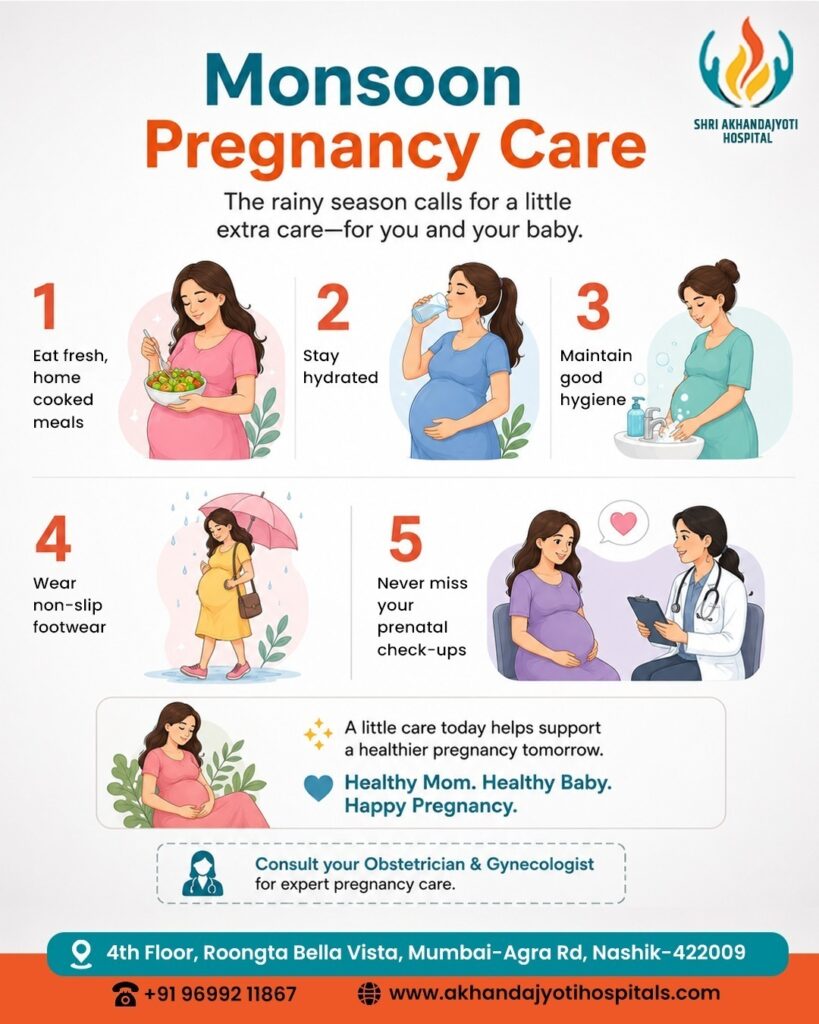
1. Prefer Fresh and Home-Cooked Meals
Food safety becomes particularly important during the rainy season. Whenever possible, choose freshly prepared, thoroughly cooked meals.
A balanced pregnancy diet may include:
- Freshly cooked vegetables
- Seasonal fruits that are properly washed
- Whole grains and cereals
- Pulses, beans and other protein sources
- Milk or suitable dairy products
- Nuts and seeds according to individual dietary needs
- Adequate sources of iron, calcium and other essential nutrients
Avoid food that has been stored improperly or exposed to unhygienic conditions. Raw or undercooked foods may carry a higher risk of contamination.
Women looking for guidance related to Normal Delivery in Nashik should remember that nutrition during pregnancy should be personalized. Your obstetrician can recommend dietary changes based on your trimester, nutritional status and medical history.
2. Stay Well Hydrated
Many people associate dehydration with hot weather, but adequate fluid intake remains important during the monsoon as well. Humidity and changes in routine can make it easy to overlook water consumption.
Drink safe, clean water throughout the day. Depending on your doctor’s advice, you may also include suitable fluids such as milk, soups or other healthy beverages.
Proper hydration supports normal body functions and may help reduce problems associated with inadequate fluid intake.
If you are experiencing persistent vomiting, diarrhea, fever, dizziness or difficulty keeping fluids down, contact your healthcare provider rather than trying to manage significant symptoms on your own.
3. Pay Extra Attention to Personal Hygiene
Rainy weather can create favorable conditions for the growth and spread of microorganisms. Good personal hygiene is therefore an important part of pregnancy care.
Simple habits include:
- Wash your hands regularly with soap and water.
- Keep your surroundings clean and dry.
- Wash fruits and vegetables properly before consumption.
- Avoid consuming food from questionable hygienic sources.
- Change out of damp clothes promptly.
- Keep bathrooms and frequently used surfaces clean.
- Follow your doctor’s advice regarding infection prevention.
Good hygiene is particularly useful for reducing avoidable exposure to common infections.
If you are searching for the Best Gynac hospital in Nashik, consider choosing a facility where you can receive appropriate prenatal monitoring and professional guidance throughout pregnancy.
4. Choose Safe, Non-Slip Footwear
Wet roads, stairs and floors can become slippery during the rainy season. Pregnancy can also alter balance as the body changes, particularly during the later months.
Wearing comfortable, well-fitting footwear with good grip can help reduce the risk of slipping.
When going outside:
- Prefer footwear with a non-slip sole.
- Avoid very high heels.
- Walk carefully on wet surfaces.
- Use handrails on stairs whenever available.
- Avoid unnecessary travel during extremely heavy rainfall.
Preventing falls is an important aspect of practical monsoon pregnancy care.
Women considering Normal Delivery in Nashik should continue appropriate physical activity when their doctor says it is safe. Gentle walking or pregnancy-appropriate exercises may be suitable for some women, but exercise plans should be individualized.
5. Do Not Miss Prenatal Check-Ups
Regular prenatal appointments are one of the most important aspects of pregnancy care. These visits allow your obstetrician to monitor the mother’s health and the baby’s development.
Depending on the stage and needs of the pregnancy, your doctor may monitor:
- Blood pressure
- Weight and general health
- Baby’s growth
- Fetal heartbeat
- Blood and urine investigations
- Ultrasound examinations when indicated
- Nutritional requirements
- Warning signs or pregnancy-related complications
Do not postpone an appointment simply because it is raining. If travel becomes difficult or unsafe, contact your healthcare provider to understand the appropriate next step.
For women interested in Normal Delivery in Nashik, regular prenatal monitoring can help doctors assess pregnancy progress and discuss delivery planning as the due date approaches.
6. Protect Yourself From Seasonal Infections
During the monsoon, infections affecting the digestive system, respiratory system and skin can become more common. Pregnant women should take reasonable precautions without becoming unnecessarily anxious.
Avoid drinking untreated water and be cautious with food prepared in unhygienic surroundings. Keep your living environment clean and ensure adequate ventilation.
If you develop symptoms such as persistent fever, severe diarrhea, repeated vomiting, breathing difficulty, unusual weakness or other concerning symptoms, speak with your doctor promptly.
Never start antibiotics or other medicines during pregnancy without appropriate medical advice.
7. Keep Your Surroundings Dry and Clean
Moisture can contribute to unpleasant odors, fungal growth and unhygienic conditions. Try to keep bedrooms, bathrooms and frequently used areas clean and adequately ventilated.
Pay attention to areas where water tends to collect. Mosquito control is also important during the monsoon because mosquito-borne illnesses can be particularly concerning during pregnancy.
Using appropriate preventive measures and following local public-health recommendations can help reduce unnecessary exposure.
8. Follow Your Obstetrician's Advice
Every pregnancy is different. Advice that may be appropriate for one woman may not be suitable for another.
Your obstetrician may provide specific recommendations regarding:
Diet
Supplements
Physical activity
Rest
Travel
Vaccinations
Medical investigations
Warning signs
Delivery planning
If your pregnancy has specific medical considerations, follow your doctor’s individualized plan rather than relying only on general information available online.
For families looking for the Best Gynac hospital in Nashik, continuity of prenatal care and access to qualified obstetric and gynecological guidance are important factors to consider.
How Can Monsoon Care Support a Healthy Pregnancy?
Monsoon pregnancy care is not about following complicated routines. Small, consistent habits can make everyday pregnancy management easier.
A practical routine can include:
Morning: Start the day with prescribed medicines or supplements, a nutritious breakfast and adequate hydration.
During the day: Choose fresh food, drink safe water, maintain hand hygiene and avoid unnecessary exposure to slippery or unsafe areas.
Evening: Take a safe, doctor-approved walk if appropriate, get sufficient rest and maintain a comfortable indoor environment.
Throughout pregnancy: Attend scheduled prenatal appointments and immediately discuss concerning symptoms with your healthcare provider.
For women planning Normal Delivery in Nashik, these healthy habits should complement—not replace—regular medical supervision.
When Should You Contact Your Doctor?
Some pregnancy symptoms require prompt medical attention. Contact your obstetrician if you experience symptoms such as:
Vaginal bleeding
Leakage of fluid
Severe abdominal pain
Severe or persistent headache
Vision changes
Significant swelling
Persistent vomiting or diarrhea
Fever
Reduced fetal movement after your healthcare provider has advised you about monitoring movements
Difficulty breathing or other severe symptoms
The appropriate response depends on your pregnancy stage and medical history. When in doubt, contact your healthcare provider.
Choosing Pregnancy Care in Nashik
Selecting a maternity care provider is an important decision for expecting parents. Look for a healthcare facility that provides appropriate prenatal monitoring, obstetric consultation and guidance throughout pregnancy.
If you are researching the Best Gynac hospital in Nashik, consider practical factors such as the qualifications of the medical team, available maternity services, location, appointment accessibility and the type of pregnancy care offered.
Shri Akhandajyoti Hospital in Nashik provides obstetric and gynecological care for women at different stages of their reproductive and pregnancy journey.
For women preparing for Normal Delivery in Nashik, discussing your pregnancy history, health conditions, previous deliveries and expectations with your obstetrician can help you understand your available options. The final delivery plan should always be based on clinical assessment and the safety of both mother and baby.
Conclusion
The rainy season does not have to make pregnancy stressful. With sensible precautions, expecting mothers can focus on nutritious food, adequate hydration, personal hygiene, safe movement and regular prenatal care.
If you are preparing for Normal Delivery in Nashik, remember that a healthy pregnancy involves much more than the mode of delivery. Consistent prenatal monitoring, healthy lifestyle habits and timely medical attention are important throughout the pregnancy.
For personalized pregnancy guidance, consult a qualified obstetrician and gynecologist who can understand your individual needs and provide appropriate medical recommendations.
Looking for pregnancy and gynecological care in Nashik? Shri Akhandajyoti Hospital provides obstetric and gynecological consultation to support women through pregnancy and related healthcare needs.
Frequently Asked Questions
Yes. Pregnancy can generally continue safely during the monsoon with appropriate precautions such as safe food and water, good hygiene, careful walking and regular prenatal check-ups.
Freshly prepared, thoroughly cooked and nutritionally balanced meals are generally preferable. Wash fruits and vegetables properly and avoid food from unhygienic sources.
Adequate fluid intake supports normal body functions. Your healthcare provider can advise you about your individual fluid requirements, particularly if you have a medical condition.
For many healthy pregnancies, gentle physical activity may be appropriate, but this depends on individual circumstances. Ask your obstetrician before starting or changing an exercise routine.
The schedule varies according to your pregnancy stage and individual health. Follow the appointment schedule recommended by your obstetrician.
Contact your obstetrician promptly, particularly if symptoms are severe, persistent or associated with bleeding, fluid leakage, severe pain, fever or reduced fetal movement.
Shri Akhandajyoti Hospital, 4th Floor, Roongta Bella Vista, Mumbai-Agra Road, Nashik, provides obstetric and gynecological consultation. Appointment and treatment decisions should be discussed directly with the medical team.